Sissejuhatus
This manual provides guidance on effective short-form communication, essential for platforms like Twitter, Facebook, and text messaging. It focuses on developing clear, concise, and impactful messages within character constraints.
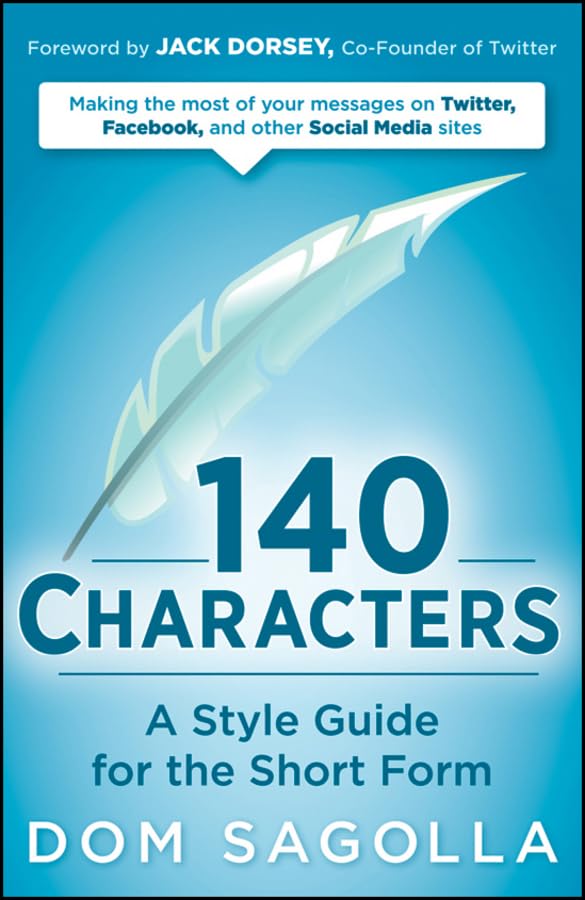
Image: The cover of "140 Characters: A Style Guide for the Short Form," illustrating the book's focus on writing for brevity.
Authored by Dom Sagolla, a co-creator of Twitter, this guide distills principles for communicating with simplicity, honesty, and humor in limited spaces. It serves as a foundational resource for anyone seeking to enhance their digital communication skills.
Getting Started: Approaching the Guide
To maximize the benefits of this style guide, consider the following approach:
- Understand the Core Concept: Recognize that short-form writing is a distinct skill requiring deliberate practice.
- Loe aktiivselt: Engage with each chapter, paying attention to the exampvähem ette nähtud.
- Reflect and Apply: After reading a section, consider how the principles can be applied to your own communication habits.
The guide emphasizes that effective short-form communication is not merely about brevity, but about conveying meaning efficiently and engagingly.
Applying the Principles of Short-Form Writing
This section outlines key principles for crafting effective short messages:
1. Simplicity and Clarity
Focus on direct language. Avoid jargon or overly complex sentence structures. The goal is immediate comprehension.
- Use strong verbs and precise nouns.
- Eliminate unnecessary words and phrases.
- Ensure your message has a single, clear purpose.
2. Honesty and Authenticity
Authenticity builds trust. Communicate genuinely and avoid misrepresentation. Your voice should be consistent with your identity or brand.
3. Humor and Engagement
Appropriate humor can enhance engagement. Understand your audience and context before incorporating humor. The guide explores techniques for injecting personality without sacrificing clarity.
4. Grammar and Punctuation
While short-form writing often involves informal language, a foundational understanding of grammar and punctuation remains crucial for clarity. The guide addresses evolving rules and conventions specific to digital communication.
Continuous Improvement: Refining Your Style
Developing a unique and effective short-form writing style is an ongoing process. The manual encourages:
- Regulaarne praktika: Consistent writing and self-critique are essential.
- Observing Others: Analyze effective short-form communicators and identify elements you admire.
- Tagasiside otsimine: Share your writing and be open to constructive criticism.
The goal is to evolve your communication to be both succinct and impactful, adapting to various platforms and audiences.
Levinud väljakutsed ja lahendused
Short-form writing presents specific hurdles. This section addresses common issues:
| Väljakutse | Solution/Guidance |
|---|---|
| Character Limits | Prioritize essential information. Use abbreviations judiciously. Employ URL shorteners for links. |
| Misinterpretation | Review for ambiguity. Consider tone carefully, as it can be lost in text. Use emojis or context clues where appropriate to convey emotion. |
| Information Overload | Break down complex ideas into multiple, sequential short messages if necessary. Link to longer content for details. |
Tehnilised andmed
Key details regarding the publication:
- Väljaandja: Wiley
- Avaldamise kuupäev: 12. oktoober 2009
- Väljaanne: 1
- Keel: inglise keel
- Prindi pikkus: 208 lehekülge
- ISBN-10: 0470556137
- ISBN-13: 978-0470556139
- Kauba kaal: 7.7 untsi
- Mõõdud: 5.45 x 0.5 x 8.47 tolli
Tugi ja lisaressursid
For additional information or inquiries regarding the content of this style guide, please refer to the publisher's resources.
Väljaandja: Wiley
For general inquiries about writing and communication, consider exploring reputable online writing labs or style guides for broader principles.


