1. Introduction to This Laboratory Manual
This manual is designed for use in a two-term, freshman-level General, Organic, and Biochemistry (G.O.B.) laboratory course. It is specifically tailored for Allied Health students and includes 42 experiments intended to complement the lecture course material. The Ninth Edition has been thoroughly updated to incorporate the most current terminology and environmental standards relevant to laboratory practices.
The content emphasizes safe laboratory procedures and provides up-to-date information on waste disposal. Additionally, the manual features 6 study aids and 26 exercises to enhance learning and comprehension of the experimental concepts.
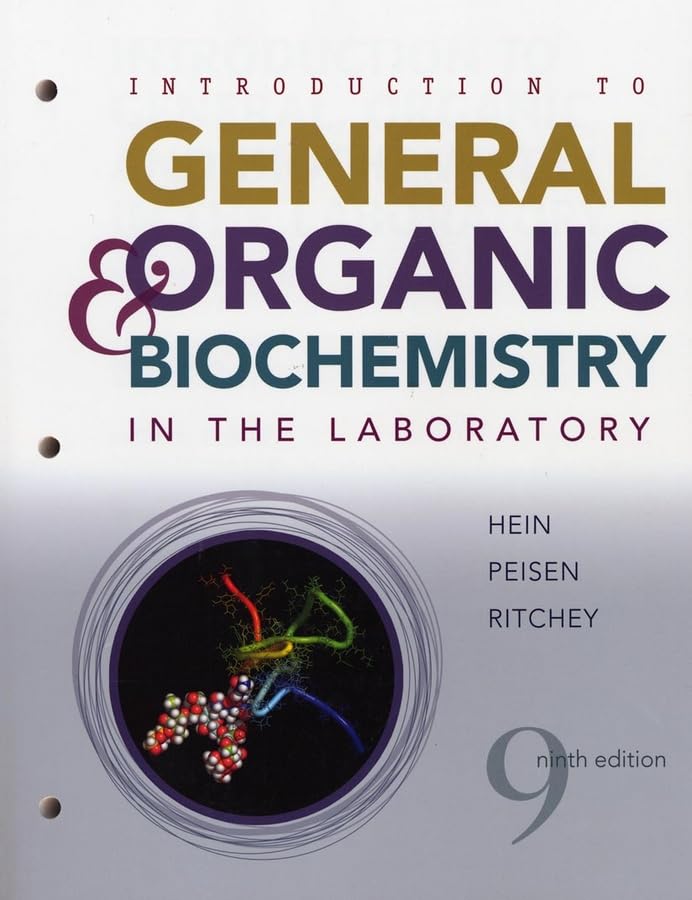
Joonis 1.1: Cover of the 'Introduction to General, Organic, and Biochemistry in the Laboratory' 9th Edition manual. This image displays the front cover of the textbook, which is essential for identifying the correct edition and content.
2. General Laboratory Safety Guidelines
Adherence to safety protocols is paramount in any laboratory setting. This section outlines general guidelines to ensure a safe working environment for all users.
2.1 Isikukaitsevahendid (PPE)
- Always wear appropriate eye protection (safety goggles or glasses) when in the laboratory.
- Wear a lab coat to protect clothing and skin from chemical splashes.
- Gloves should be worn when handling chemicals, and changed regularly or immediately if contaminated.
2.2 Chemical Handling and Storage
- Read all chemical labels and Safety Data Sheets (SDS) before use.
- Never taste or smell chemicals directly. Use proper wafting techniques if odor assessment is necessary.
- Store chemicals in designated areas, ensuring proper segregation of incompatible substances.
2.3 Hädaabiprotseduurid
- Familiarize yourself with the location of safety showers, eyewash stations, fire extinguishers, and emergency exits.
- Report all accidents, spills, or injuries to your instructor immediately, no matter how minor.
- In case of a chemical spill, follow established cleanup procedures and use appropriate spill kits.
3. Performing Experiments
This manual contains 42 distinct experiments designed to provide hands-on experience with general, organic, and biochemistry principles. Each experiment is structured to guide you through the process effectively.
3.1 Preparation Before Lab
- Read the entire experiment thoroughly before coming to the lab. Understand the objective, procedure, and safety precautions.
- Prepare your laboratory notebook by outlining the procedure, creating data tables, and noting any specific observations to look for.
- Identify all necessary equipment and chemicals.
3.2 Following Experimental Procedures
- Follow the steps exactly as written in the manual. Do not deviate without instructor permission.
- Measure all reagents accurately using appropriate glassware and instruments.
- Record all observations, measurements, and results directly into your lab notebook as they occur.
- Pay close attention to reaction conditions, such as temperature, time, and mixing.
3.3 Waste Disposal and Environmental Standards
Proper waste disposal is critical for environmental protection and laboratory safety. Always follow the specific disposal instructions provided for each experiment.
- Segregate waste into designated containers (e.g., organic waste, aqueous waste, solid waste, broken glass).
- Never pour chemicals down the drain unless explicitly instructed to do so.
- Consult your instructor if you are unsure about the proper disposal method for any substance.
4. Utilizing Study Aids and Exercises
The manual includes 6 study aids and 26 exercises designed to reinforce your understanding of the laboratory concepts and prepare you for assessments.
- Study Aids: These sections provide supplementary information, background context, or simplified explanations of complex topics. Review them before and after performing related experiments.
- Harjutused: Complete the exercises to test your comprehension of the experimental procedures, data analysis, and theoretical principles. These often include pre-lab questions, post-lab questions, and calculations.
- Discuss any difficulties with your instructor or study group to deepen your understanding.
5. Tehnilised andmed
| Atribuut | Detail |
|---|---|
| Pealkiri | Introduction to General, Organic, and Biochemistry in the Laboratory |
| Kirjastaja | Wiley |
| Avaldamise kuupäev | 13. mai 2008 |
| väljaanne | 9 |
| Keel | inglise keel |
| Prindi pikkus | 504 lehekülge |
| ISBN-10 | 0470239654 |
| ISBN-13 | 978-0470239650 |
| Kauba kaal | 2.2 naela |
| Mõõtmed | 8.5 x 1.07 x 10.93 tolli |
6. Publisher Information and Support
For any inquiries regarding the content of this laboratory manual, errata, or general support, please contact the publisher directly.
- Väljaandja: Wiley
- Websait: www.wiley.com (Please visit the official Wiley website for contact information, educational resources, and support.)
- Autorid: Morris Hein, Judith N. Peisen, James M. Ritchey
This manual is a textbook and does not come with a traditional product warranty. For issues related to printing defects or missing pages, please contact your bookstore or the publisher's customer service department with proof of purchase.


